A car accident can happen in seconds, but understanding what comes next often feels like a mystery. Once your vehicle leaves the scene of a collision, it enters a process most drivers never see up close: inspection, diagnosis, repair, and quality verification. Even a seemingly minor fender bender can involve steps that aren't obvious from the outside.
Understanding what auto collision repair services actually involve can help you feel more confident and informed the next time you’re navigating life after an accident. This article walks through the full process, from the moment your car arrives at a shop to the final quality check before it’s handed back to you.
The First Step: Getting Your Vehicle Safely Off the Road
Before any repair work begins, your vehicle typically needs to be moved from the accident scene. Depending on the severity of the damage, this might mean driving it a short distance yourself, or it might require professional towing after collision if the car isn’t safe or legal to operate.
Technicians and tow operators are trained to look for immediate red flags, such as leaking fluids, a damaged undercarriage, or wheels that aren’t aligned properly. These early observations often shape the initial repair plan, even before a full inspection takes place.
Call emergency services if anyone is injured or if the accident involves significant damage. Even in cases that seem minor, many local laws require a police report for accidents above a certain damage threshold, so it’s worth contacting law enforcement if you’re unsure whether a report is necessary.
Why Damage Isn't Always What It Looks Like
One of the most important things to understand about collision damage is that what you see on the surface rarely tells the whole story. A cracked bumper or a dented door panel might be the most visible sign of an accident, but the forces involved in even a low-speed collision can travel through the vehicle’s structure in ways that aren’t visible to the naked eye.
This is why professional auto body repair shops don’t rely on a quick visual glance to determine what needs to be fixed. Instead, they use a structured inspection process designed to catch both obvious and hidden damage.
Visible Damage
Visible damage is usually the easiest to identify and includes things like:
- Dented or crumpled body panels
- Cracked or broken bumpers
- Shattered or chipped glass
- Scraped or chipped paint
- Misaligned panel gaps
Hidden Damage
Hidden damage is harder to detect but can be just as significant. It may include:
- Bent or misaligned frame components
- Damage to suspension or steering parts
- Compromised safety systems, such as airbag sensors
- Internal damage to the radiator, cooling lines, or engine mounts
- Stress fractures in structural metal that aren’t visible from the outside
Because hidden damage can affect how a vehicle handles and performs, a thorough inspection is a critical part of any legitimate collision repair services process.
How Technicians Assess the Full Extent of Damage
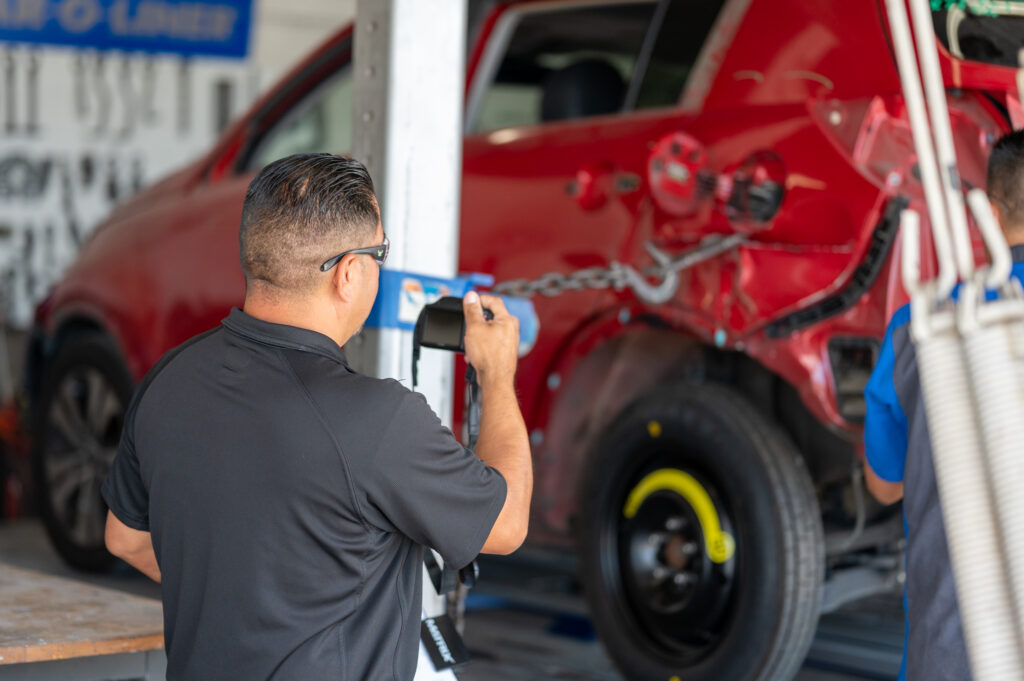
Modern collision repair relies on a combination of visual inspection, diagnostic tools, and measurement technology to understand exactly what happened to a vehicle during impact.
Visual and Physical Inspection
Technicians begin by examining the exterior and interior of the vehicle, checking panel alignment, door function, and any areas where impact forces were concentrated. They also inspect components that are more likely to be affected in a collision, such as the bumper assembly, headlight housings, and wheel wells.
Frame and Structural Measurement
Many collisions, even minor ones, can affect a vehicle’s frame or unibody structure. Technicians often use computerized measuring systems to compare the vehicle’s current dimensions to the manufacturer’s original specifications. This step is essential for identifying car frame repair needs that wouldn’t be obvious through a visual check alone.
If the frame or structural components are out of alignment, even slightly, it can affect how the vehicle drives, how evenly tires wear, and how safety systems function in a future collision.
Diagnostic Scanning
While every repair is different, auto collision repair services generally follow a similar sequence:
- Initial vehicle inspection
- Detailed damage assessment
- Coordination with your insurance company
- Disassembly to check for hidden damage
- Structural or body repairs, including frame correction if needed
- Replacement of damaged parts
- Paint matching and refinishing
- Reassembly of the vehicle
- A final quality and safety inspection
Collision repair services often involve multiple specialists working through these stages, from structural technicians to painters, which is part of why timelines can vary depending on the damage.
The Repair Process, Step by Step
Once the inspection and diagnostics are complete, a repair plan is created. While every vehicle and collision is different, most professional auto repair services follow a similar general sequence.
1. Disassembly
Technicians remove damaged parts and trim to get a clearer view of the underlying structure. This step often reveals additional damage that wasn’t visible during the initial inspection.
2. Structural and Frame Repair
If the inspection identified frame or unibody misalignment, this is typically addressed early in the process. Specialized equipment is used to carefully restore the vehicle’s structure to factory specifications, since structural integrity affects both safety and long-term performance.
3. Body Repair
This stage addresses dents, bent panels, and other body damage. Depending on the extent of the damage, technicians may repair existing panels or replace them entirely. This is also where bumper repair service work typically takes place, since bumpers are often among the most impacted components in a collision.
4. Metal and Panel Work
Some vehicles, particularly newer models, use aluminum or specialty metal components. These materials require different repair techniques than traditional steel, which is why aluminum body repair is often handled by technicians with specific training and equipment for these materials.
5. Paint Matching and Refinishing
Once structural and body repairs are complete, the vehicle typically moves to the paint stage. Technicians use color-matching technology to blend new paint with the vehicle’s existing finish. Multiple layers, including primer, base coat, and clear coat, are applied and cured under controlled conditions to ensure a durable, consistent finish.
6. Reassembly
After paint work is completed, technicians reinstall trim, lights, mirrors, and any other components that were removed earlier in the process. This step also includes reconnecting and testing electronic systems.
The Final Inspection: Making Sure Everything Works Together
Before a vehicle is returned to its owner, it typically goes through a final quality check. This step is meant to confirm that:
- Panel gaps and alignment meet factory standards
- Paint color and finish match consistently across the vehicle
- All mechanical systems function properly
- Safety systems, including airbags and sensors, have been tested and calibrated
- The vehicle drives and handles as expected
This final inspection is where many hidden issues, if they were missed earlier, would typically surface. It’s an important safeguard that helps ensure the vehicle isn’t just cosmetically repaired, but genuinely restored to safe, functional condition.
Why This Process Matters for Vehicle Owners
Understanding this process can help you ask better questions and know what to expect, whether you’re dealing with a minor bumper repair or a more involved structural repair. It also highlights why collision repair isn’t just about appearance. A vehicle that looks fine on the outside can still have underlying issues if hidden damage wasn’t properly identified and addressed.
This is particularly true for modern vehicles, which rely on precise structural alignment and calibrated sensors to function safely. As vehicles become more technologically advanced, the inspection and repair process has evolved to match, combining traditional bodywork skills with diagnostic technology and manufacturer-specific repair standards.
Finding the Right Help After a Collision
If you’re dealing with the aftermath of a collision, working with a shop that understands both the visible and hidden sides of vehicle damage can make a meaningful difference in the outcome. For drivers in the area, Covina Auto Body offers a range of auto body repair services, including collision repair, car frame repair, and paint refinishing, as one option for those looking to have their vehicle properly assessed and repaired after an accident.
Whatever shop you choose, the most important takeaway is this: a thorough, well-documented repair process, one that addresses both what you can see and what you can’t, is the best way to ensure your vehicle is genuinely safe to drive again.
Free Structural Inspection
I-CAR Gold Class technicians · Direct insurance billing · Lifetime warranty on every repair.